Fractures & Trauma Care: Casting, Plating & Nailing
- Home
- Treatments List
- Fractures & Trauma Care: Casting, Plating & Nailing
Fractures & Trauma Care: Casting, Plating & Nailing
Get expert fracture and trauma care at Baluni Hospital, including casting, plating and nailing for stable, complex and displaced fractures, with personalised orthopaedic care and guided recovery.,,
A fracture can happen suddenly after a fall, road accident, sports injury or even a minor incident in a weakened bone. Getting the right diagnosis early can prevent complications and support better recovery. At Baluni Hospital, Bone Fracture Surgery in Dehradun is recommended only when a fracture requires surgical stabilisation. Depending on the injury, treatment may include casting, plating or nailing. The orthopaedic team considers the location of the fracture, bone displacement, soft-tissue damage, age, general health and expected activity level before deciding on the most suitable approach.
What Is Fracture & Trauma Care?
Fracture care begins with a proper clinical examination and imaging, usually an X-ray and, in selected complex cases, a CT scan. The purpose is to understand whether the bone is aligned, whether the fracture is stable and whether surrounding tissues have also been affected.
Some fractures can heal with a cast or splint, while displaced, unstable, open or multiple-fragment fractures may need fixation. If you are searching for Broken Bone Surgery in Dehradun, it is important to remember that surgery is not necessary for every broken bone. An orthopaedic specialist should determine the appropriate treatment after evaluating the injury.
Casting for Stable Fractures
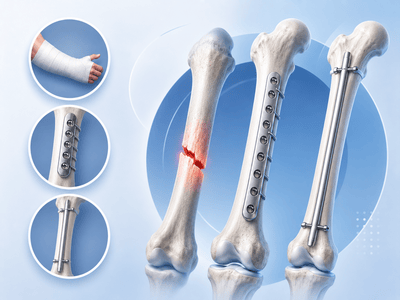
Casting is one of the most common non-surgical approaches for fractures that are properly aligned and can remain stable while healing. A cast restricts movement and protects the injured bone during the recovery period.
Patients should follow instructions regarding weight-bearing, cast care and follow-up appointments. Increasing pain, numbness, excessive swelling, changes in skin colour or a cast that feels unusually tight should not be ignored.
Plating and Screw Fixation
Some fractures cannot maintain their alignment with a cast alone. In these cases, plating may be recommended. During the procedure, the surgeon carefully realigns the fractured bone and secures it using a metal plate and screws.
For patients seeking Fracture Fixation Treatment in Dehradun, the type and position of the fracture are important factors in selecting the fixation method. The aim is to provide sufficient stability while allowing the bone to heal appropriately.
Intramedullary Nailing
Intramedullary nailing involves placing a specially designed metal rod inside the central canal of a long bone. It is commonly considered for selected fractures involving long bones such as the femur and tibia.
For patients requiring Complex Fracture Treatment in Uttarakhand, nailing can be an effective option in appropriately selected cases. The decision depends on the fracture pattern, location and overall condition of the patient.
When Should You Seek Emergency Fracture Care?
Severe pain, visible deformity, inability to bear weight, significant swelling, bleeding, numbness or an open wound near the injury can indicate a serious fracture. Road accidents and high-impact injuries may also involve damage to blood vessels, nerves or other tissues.
If you are searching for Fracture Treatment Near Me, avoid trying to straighten or manipulate the injured limb yourself. Keep it as still as possible and seek medical evaluation promptly. Emergency assessment becomes particularly important when there is uncontrolled bleeding, loss of sensation or a visibly deformed limb.
Recovery After Fracture Treatment
Recovery depends on the type of fracture, treatment method and individual healing response. After surgery, patients may need wound care, medicines, activity restrictions and scheduled follow-ups. Physiotherapy may also be recommended to restore strength, flexibility and normal movement.
The Orthopedics and Joint Replacement Surgery department can guide patients through appropriate follow-up and rehabilitation when required. Returning to normal activity too quickly can affect recovery, so patients should follow the treating specialist's instructions.
Why Choose Baluni Hospital for Fracture Care?
Baluni Hospital provides orthopaedic and trauma care supported by diagnostic facilities, emergency services and specialist consultation. Patients can receive evaluation for fractures ranging from relatively simple injuries to cases requiring surgical fixation.
For individuals considering Bone Fracture Surgery in Dehradun, the focus should be on accurate diagnosis, appropriate treatment selection and planned follow-up rather than choosing surgery simply because the fracture appears serious. If you or a family member has sustained an injury, Contact Us to arrange an orthopaedic consultation or seek emergency care when the injury is severe.
Frequently Asked Questions
1. Does every broken bone require surgery?
No. Many fractures can heal with a cast or splint if the bone is properly aligned and remains stable. Surgery is generally considered when the fracture is displaced, unstable, open, severely fragmented or unlikely to heal correctly without fixation.
2. How do I know if my fracture needs plating or nailing?
The decision depends on the bone involved, fracture pattern, displacement and overall condition of the injury. An orthopaedic specialist will assess imaging and clinical findings before recommending plating, nailing or another treatment.
3. How long does a broken bone take to heal?
Healing time varies considerably. Factors include the type and location of the fracture, age, general health, smoking status and whether complications are present. Your doctor can provide a more meaningful estimate after evaluating the specific injury.
4. Can I walk after fracture surgery?
It depends on the fractured bone and the stability achieved during treatment. Some patients may be allowed limited weight-bearing soon after surgery, while others need to avoid putting weight on the affected limb for a period of time.
5. What should I do immediately after a suspected fracture?
Keep the injured area as still as possible and avoid attempting to straighten the limb. If there is severe pain, deformity, bleeding, numbness or an open wound, seek emergency medical attention rather than trying to manage the injury at home.
6. Is fracture surgery painful?
Pain is expected after a significant injury or surgery, but appropriate medicines are used to manage it. Your doctor will explain pain-control measures and what symptoms should be reported during recovery.
7. When should I look for fracture treatment near me?
Prompt evaluation is advisable whenever a person has significant pain, swelling, deformity or difficulty moving an injured limb after an accident or fall. Early assessment helps determine whether the injury is a fracture and what treatment is appropriate.
8. Will I need physiotherapy after fracture treatment?
Not everyone needs the same rehabilitation programme. Physiotherapy may be recommended after immobilisation or surgery to improve movement, strength and function. The timing depends on the fracture and the doctor's assessment.
9. Can an old fracture that has not healed properly be treated?
Some fractures can develop delayed healing or non-union. Treatment depends on why healing has been affected and may involve further imaging, immobilisation, bone stimulation or surgical intervention. An orthopaedic assessment is needed to determine the cause.
10. Where can I consult an orthopaedic specialist in Dehradun?
Patients can consult the orthopaedic team at Baluni Hospital for assessment of fractures and trauma-related injuries. For an appointment or further information, Contact Us and discuss your symptoms and injury with the hospital team.
Register Online Before You Arrive.
Reserve your spot now and avoid waiting. We look forward to assisting you!
Book an Appointment