

Hernia repair surgery
- Home
- Treatments List
- Hernia repair surgery
Hernia repair surgery
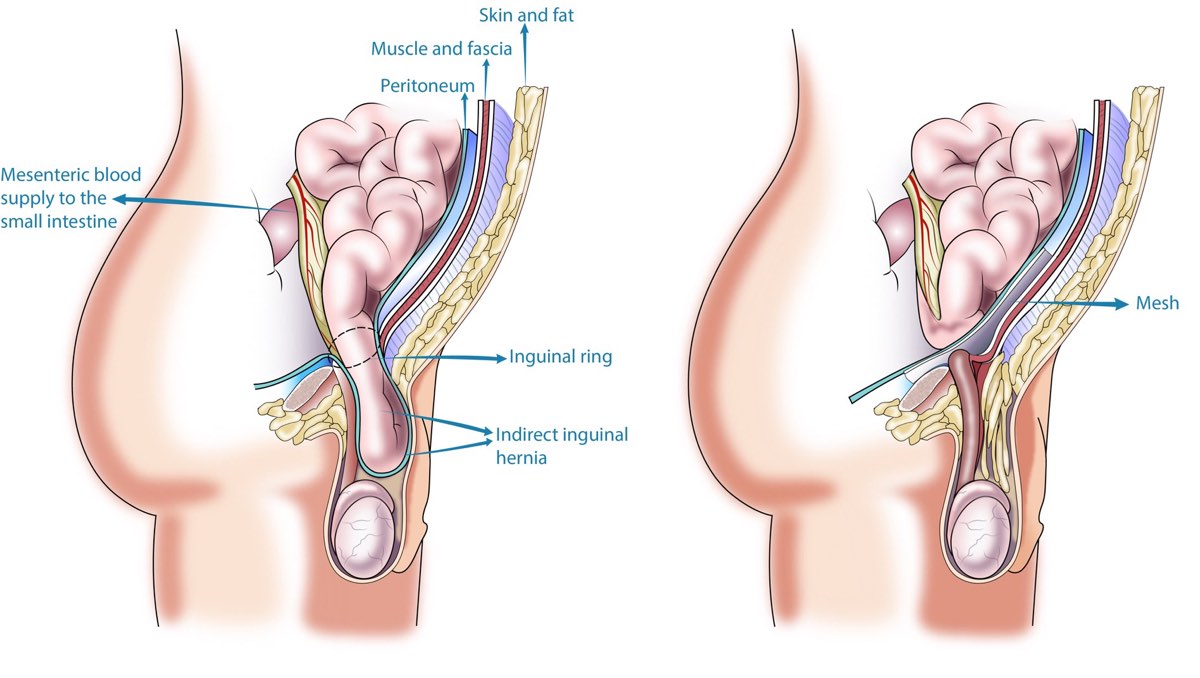
Hernia Repair Surgery (Hernioplasty) is a procedure performed to correct a weakness or hole in the abdominal wall through which internal organs or fatty tissue have protruded. Whether performed via minimally invasive laparoscopic techniques or traditional open surgery, the goal is to safely reposition the displaced tissue and reinforce the weakened area—usually with a medical-grade mesh—to prevent recurrence and relieve pain.,,
Overview
A hernia occurs when an internal organ (often the intestine) pushes through a weak spot in the surrounding muscle or connective tissue. Hernias do not heal on their own and typically grow larger over time. Surgery is recommended to alleviate discomfort and prevent serious complications, such as incarceration or strangulation, where the blood supply to the trapped tissue is cut off.
Common Types of Hernias Treated
-
Inguinal Hernia: Occurs in the groin; the most common type of hernia.
-
Femoral Hernia: Appears just below the groin, more common in women.
-
Umbilical Hernia: Develops near the navel (belly button).
-
Incisional Hernia: Forms at the site of a previous surgical scar.
-
Epigastric Hernia: Occurs in the upper abdominal area between the navel and the breastbone.
Surgical Approaches
We utilize modern surgical techniques tailored to the patient’s specific needs:
-
Laparoscopic Hernia Repair: The surgeon makes several tiny incisions and uses a camera (laparoscope) to view the hernia from the inside. This "tension-free" method is highly effective, offering the fastest recovery time and the least amount of post-operative pain.
-
Open Hernia Repair: A single incision is made near the hernia site. The surgeon pushes the bulge back into place and secures the abdominal wall. This may be preferred for very large or complex hernias.
The Role of Surgical Mesh
In most repairs, a sterile, flexible mesh is used to bridge the weakness. The mesh acts as a "scaffold" for new tissue to grow into, significantly strengthening the abdominal wall and reducing the likelihood of the hernia returning compared to simple stitches alone.
Benefits of Timely Repair
-
Permanent Relief: Eliminates the persistent "heavy" sensation or sharp pain associated with the bulge.
-
Prevention of Emergencies: Avoids the risk of sudden bowel obstruction or strangulation.
-
Improved Mobility: Allows patients to return to lifting, exercising, and daily physical tasks without fear of injury.
Recovery Expectations
Recovery times vary depending on the technique used. With laparoscopic repair, most patients return to light activities within a few days and full physical exertion within 2–3 weeks. Our surgical team provides detailed guidance on lifting restrictions and activity levels to ensure long-term success of the repair.
Register Online Before You Arrive.
Reserve your spot now and avoid waiting. We look forward to assisting you!
Book an Appointment